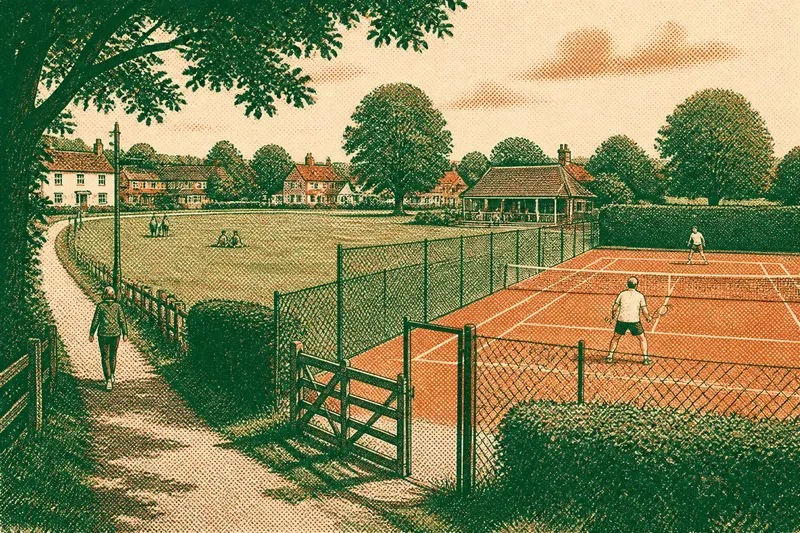
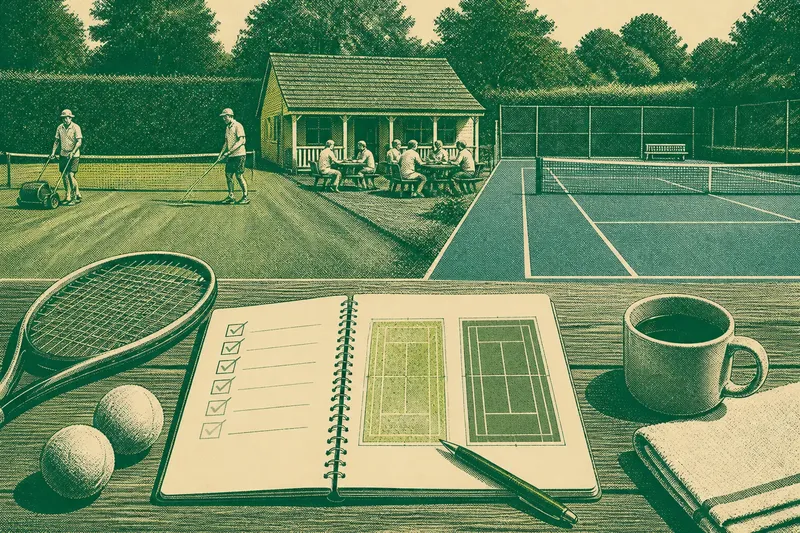
A Late-Summer Afternoon at the Courts, Without a Tight Schedule
A late-summer afternoon at the courts can feel spacious with a little preparation: arrive unhurried, plan useful pauses and let play end naturally.
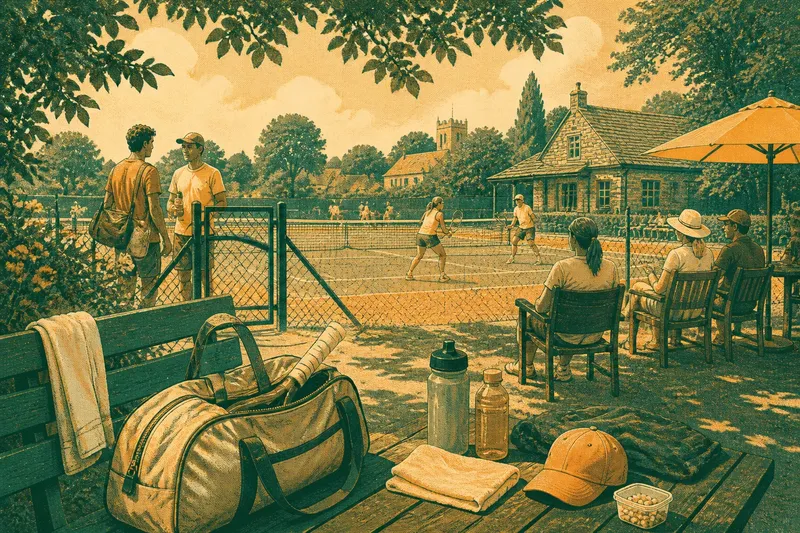
How do you plan a late-summer afternoon at the courts without turning it into a timetable? Start with a loose arrival window, bring what makes a pause comfortable, and agree that play can last as long as the group enjoys it. A late-summer afternoon at the courts is less about fitting in a certain number of games than leaving room for the day to unfold.
That approach suits village tennis particularly well. Someone may arrive by foot from a nearby lane, another player may need to leave before dusk, and a court can feel inviting even when nobody is ready to begin at once. A few simple decisions help the visit feel settled without making it rigid.
What should you decide before setting out?
Decide on a meeting window, not a precise starting time, and make sure everyone knows where to find the group if arrivals are staggered. A short message might say, “We’ll be around the courts in the late afternoon; bring a racket if you’d like to play.” It gives people useful information without implying that a match starts the moment they arrive.
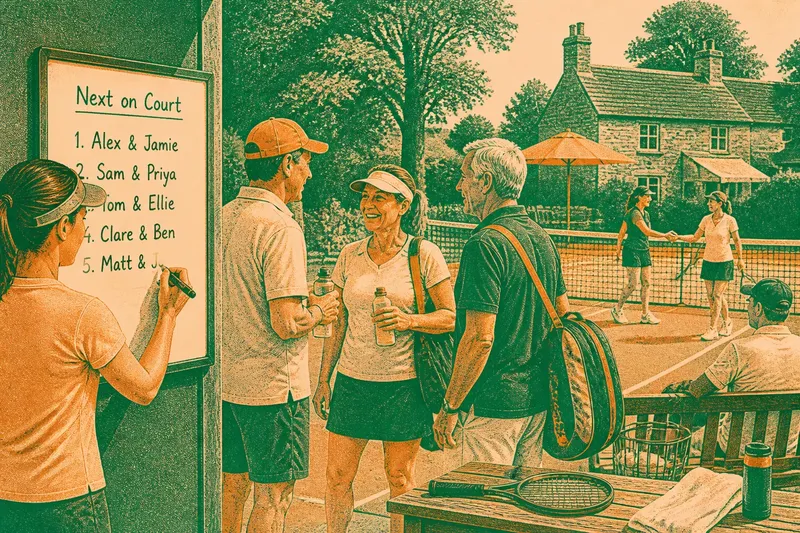
Check the practical details that could affect the visit: whether the court is available, how access works, and whether anyone needs to bring a key. If the club uses a booking board or shared calendar, look there before leaving. The aim is to avoid a preventable interruption, not to plan every point of the afternoon.
Think, too, about the people coming. If some are new to the group, let them know whether casual hitting or a proper set is more likely. If one person has limited time, say so early; the group can choose a format that lets them join without making their departure awkward.
Agree on a place to meet, then leave the rest open.
How early should you arrive?
Arrive with enough margin to put your things down, take in the court, and notice what the group is doing before you feel obliged to join. “Early” does not need to mean waiting alone for a long time. It simply means treating arrival as part of the visit rather than a race to the first serve.
Late summer can bring a mix of warm sun and cooler shade, so pause near the gate or clubhouse and choose a comfortable place for your bag. Notice whether the court surface is dry, whether leaves have gathered along the fence, and whether another group is still playing. These small observations help you settle and avoid stepping into someone else’s session.
Say you arrive before your friends and the court is occupied. You could set your bag in the agreed meeting spot, refill your water bottle, and watch from outside the playing area until the group finishes. When your friends arrive, you can decide together whether to wait, share the space if appropriate, or spend a few minutes catching up before play.
Use spare time to settle in, not to hurry the people who are still on their way.
What belongs in a relaxed court bag?
Pack for a comfortable visit rather than for every possible match scenario. A racket, balls suitable for the group, water, and a light layer usually cover the basics. A small towel can be useful after a warm rally, while a cap or sun hat may make a pause outdoors more pleasant.
- Bring water in a bottle that closes securely and is easy to reach between games.
- Pack a light sweater or windbreaker for the cooler stretch of the afternoon.
- Carry a small snack if the group may take a longer pause before heading home.
- Include any personal items you already know you need, such as glasses or a usual sun covering.
- Bring a spare ball only if it suits the group’s way of playing and the club’s arrangements.
Keep food and drink outside the playing area unless the club permits them on court. A shaded bench, clubhouse table, or clean patch beside the fence can make a better stopping point than the court itself. Where equipment, access, or court-use rules depend on club guidance or local conditions, follow the relevant instructions.
A modest bag is easier to set down and return to between turns.
How can the group leave room for breaks?
Build pauses into the social shape of the afternoon rather than treating them as interruptions. After a stretch of hitting, step off the court, drink, and let the next pair take a turn. A pause can be brief or long; its value is that nobody has to keep playing simply to preserve a schedule.
Choose a resting place that does not block the gate or distract players. A bench under a tree, a veranda, or a table near the clubhouse can give people somewhere to talk while keeping the court clear. If the village setting invites a short stroll, agree on a nearby route and leave the court area tidy before walking away.
It helps to make breaks easy to join and leave. Someone who wants to keep chatting can stay seated; someone who feels ready can return to hit. There is no need for the whole group to move as one unit every time.
Let the pause end when people are ready, not when a clock says it should.
How do you keep play flexible without leaving anyone out?
Offer a few simple choices rather than setting a fixed match plan. The group might rally in pairs, rotate after a short spell, play a set, or let those who prefer to watch take a turn later. A clear invitation matters more than a formal structure: “Would you like to hit for a while, or sit with us first?”
Be attentive to differences in energy and confidence. A newer player may prefer gentle cooperative hitting before joining a game, while someone who has played all afternoon may want to rest. You can keep the court welcoming by changing partners or pace without making a person explain why they need a break.
If the group is larger than the court can comfortably accommodate, make turns visible and fair. For instance, players waiting can agree to rotate after a game, while those resting take the next turn only if they want it. Avoid quietly assuming that the most confident players will keep the court for themselves.
Keep the invitation open, and let participation change as the afternoon goes on.
What if the weather or daylight changes?
Watch the conditions as the afternoon progresses, and be willing to adjust the plan. A breeze may make a shaded bench feel chilly; low sun can affect visibility; a passing shower may make the surface unsuitable for play. If the court seems unsafe or the club has a rule about wet conditions, stop and follow the relevant guidance rather than trying to squeeze in another game.
As daylight softens, ask the group whether it wants one more short spell or would rather finish while packing up is easy. A loose plan makes that choice straightforward: there is no promised final set that everyone must complete. Put away balls and personal items, check the resting area for litter, and leave the court ready for whoever comes next.
If someone needs to depart earlier, let them do so without treating it as a disruption. They can say goodbye between games or during a break, and the rest of the group can continue if the court remains available.
What questions help an unhurried afternoon work?
Do you need to book a court for casual play?
That depends on the club’s arrangements, so check its booking system or ask a member before setting out. If no booking is needed, still be prepared to wait when another group is using the court.
What if only a few people arrive?
A small group can still enjoy a relaxed session through cooperative rallies, serving practice, or taking turns to play and rest. Ask what people feel like doing rather than treating a particular match format as necessary.
Should everyone stay for the same amount of time?
No; a flexible visit can accommodate different arrival and departure times. Agree on a meeting place and let people know how to find the group if they join late.
How do you know when to stop playing?
Stop when the group’s energy, the conditions, or the available light makes continuing less enjoyable. A natural pause between games is a good moment to decide together.
How can you leave the afternoon feeling complete?
Close the visit with small courtesies rather than a formal ending. Return shared balls, collect cups and wrappers, and check that nobody has left a sweater or water bottle by the bench. If another group is waiting, clear the court promptly and move the conversation away from the playing area.
Then let the afternoon be what it was: a few games, a longer chat, or a mixture that changed with the weather and the people who arrived. The useful part of a late-summer afternoon at the courts is the room to choose again as the day unfolds. Leave yourself enough time to walk home without rushing, and the final stretch can feel like part of the visit rather than an afterthought.